
The construction industry, like many others in the UK, is under more pressure than ever. Rising costs, labour shortages, tightening project timelines, and more demand for genuinely sustainable solutions are forcing developers, businesses, and public sector organisations to rethink how buildings are built.
Amid all this, one approach is quickly moving from “alternative” to essential: modular construction.
Once associated with temporary classrooms and site cabins, modern modular buildings have evolved into high-quality, permanent structures used across sectors – from education and healthcare to commercial offices and residential developments. And for many, they’re proving to be not just a viable option, but the smarter one. Why, you ask? Let’s get into it:
Modular Offers Speed Without Compromise
One of the most compelling advantages of modular construction is speed. While traditional builds are subject to weather delays, labour scheduling issues, and sequential timelines, modular buildings are manufactured off-site in controlled factory environments.
This means groundwork and manufacturing can happen simultaneously, which is brilliant for reducing overall project timelines. In many cases, buildings can be completed in weeks instead of months, which is a game-changer for sectors that simply can’t afford delays – like schools that need extra classrooms or healthcare providers needing to expand capacity.
Also, faster delivery doesn’t mean lower standards, because factory-controlled production offers greater precision, consistency, and confident quality assurance in comparison to traditional on-site builds.
Cost Certainty in an Uncertain Market
With material prices fluctuating and labour costs rising, budgeting for traditional construction projects has become increasingly tricky. Modular construction offers a level of cost predictability that’s hard to match.
Because much of the process takes place in a controlled environment, there’s less risk of unexpected delays, waste, or cost overruns. Projects are planned, priced, and produced with a high degree of accuracy from the outset – giving clients far greater financial confidence.
Of course, that’s a big deal for any and all businesses, but for organisations working within fixed budgets (particularly in education and the public sector), this predictability is particularly invaluable.
A More Sustainable Way to Build
Sustainability is no longer a “nice to have” in the UK – it’s required by Net Zero goals. Modular construction aligns closely with these environmental goals by reducing waste, improving energy efficiency, and lowering carbon emissions.
Less waste ends up in landfills because off-site manufacturing allows for better use of materials. At the same time, modern modular buildings are designed with energy performance in mind, and often exceed current regulations for insulation and efficiency.
There’s also a reduction in on-site disruption – fewer deliveries, less noise, and lower emissions – making modular an environmentally and socially responsible choice, particularly in built-up or sensitive areas.
Flexibility for a Changing World
Perhaps one of the most underrated benefits of modular buildings is their flexibility. Unlike traditional structures, modular buildings can be designed with future adaptation in mind.
Need to expand? Additional modules can often be added with minimal disruption.Need to relocate? Buildings can often be dismantled and moved.Need to reconfigure internal layouts? Modular design makes it far simpler.
This flexibility is especially valuable in sectors where needs evolve quickly, like education, where pupil numbers fluctuate, or healthcare, where service demands can shift rapidly.
Built for Today and Tomorrow
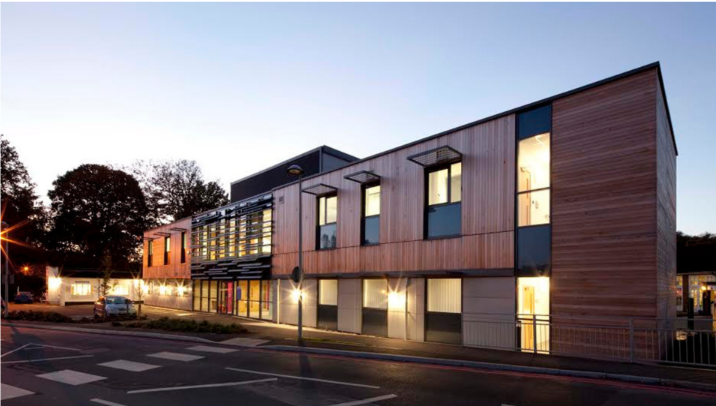
Modern modular buildings bear little resemblance to the outdated “temporary” structures many people still imagine. Today’s designs are architecturally impressive, highly durable, and built to last for decades.
They meet the same stringent building regulations as traditional construction, covering everything from fire safety and structural integrity to accessibility and energy performance. In many cases, they also incorporate advanced design features such as improved acoustics, natural lighting, and enhanced ventilation – creating spaces that are not only functional but genuinely enjoyable to use.
A Smarter Approach to Construction
As the construction industry continues to evolve, modular is no longer a niche solution – it’s a forward-thinking one that addresses so many of the challenges facing the sector in 2026 and beyond.
For organisations looking to build smarter, faster, and more sustainably, exploring modular buildings simply makes sense. With the right partner, it’s possible to achieve a building that meets today’s needs while remaining adaptable for the future.