
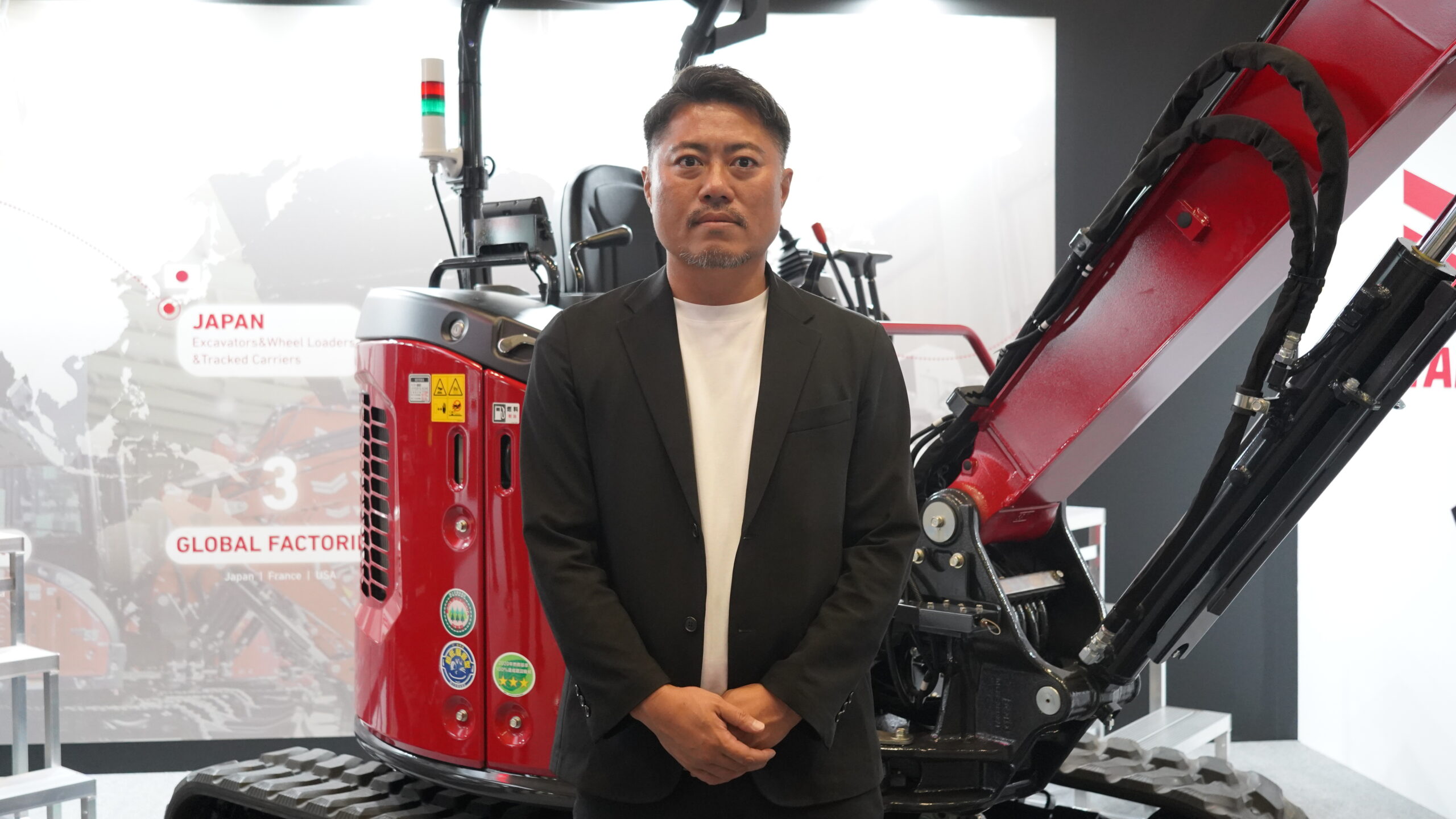
Naoki Maehara, Chief Strategy Officer at Yanmar Compact Equipment and President of the AOLA region, explains how Yanmar CE is turning a tougher market into a sharper focus on customer value and long-term growth.
Maehara’s work moves between two vantage points. One is strategic – reading the market and deciding where Yanmar Compact Equipment (Yanmar CE) must place its energy. The other is closer to the ground, shaped by conversations with dealers and customers, and by how decisions land in everyday working life.
“My role brings together two essential parts of the business: building the strategy and executing it,” he says. “Strategy cannot remain at the level of the plan. It has to be tested through customers, dealers and local teams, then refined when the market tells us something different.”
This connection matters in a market no longer moving to one rhythm. North America remains one of the largest opportunities for compact equipment, while Japan continues to be at the heart of Yanmar CE’s heritage and engineering culture. Europe is beginning to stabilize after a difficult cycle; while India represents an important long-term opportunity with its rapid, dense urbanization and Smart Cities Mission – but requires a tailored approach, shaped by localized customer needs and high price sensitivity.
“The market environment is challenging, but the need for compact equipment remains strong,” says Maehara. “Customers are looking beyond the initial sale. They want machines that work hard on the jobsite, are supported properly over time and continue to justify the investment throughout their working life.”
Strategy shaped by the market
After more than two decades inside Yanmar across sales, marketing, business development, corporate strategy and regional leadership, Maehara has learned that good decisions begin with how customers actually work. “Our machines are business tools,” he says. “Customers invest in them because they need to improve productivity, protect uptime and create value in their own operations. Every strategic decision has to begin with what customers are trying to achieve.”
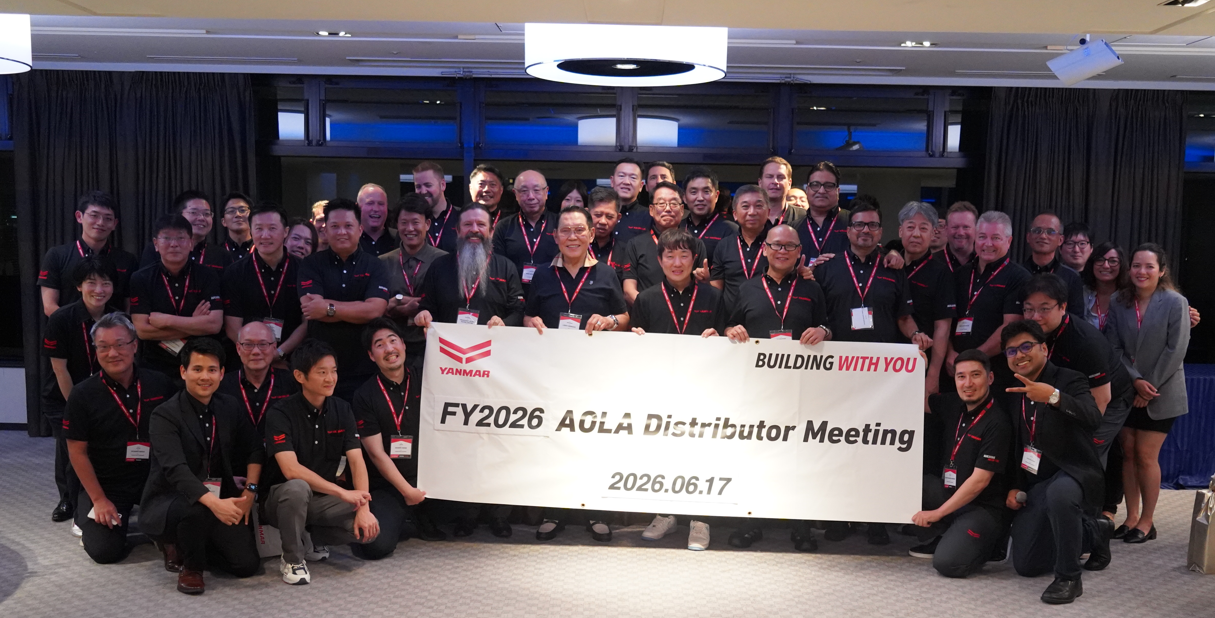
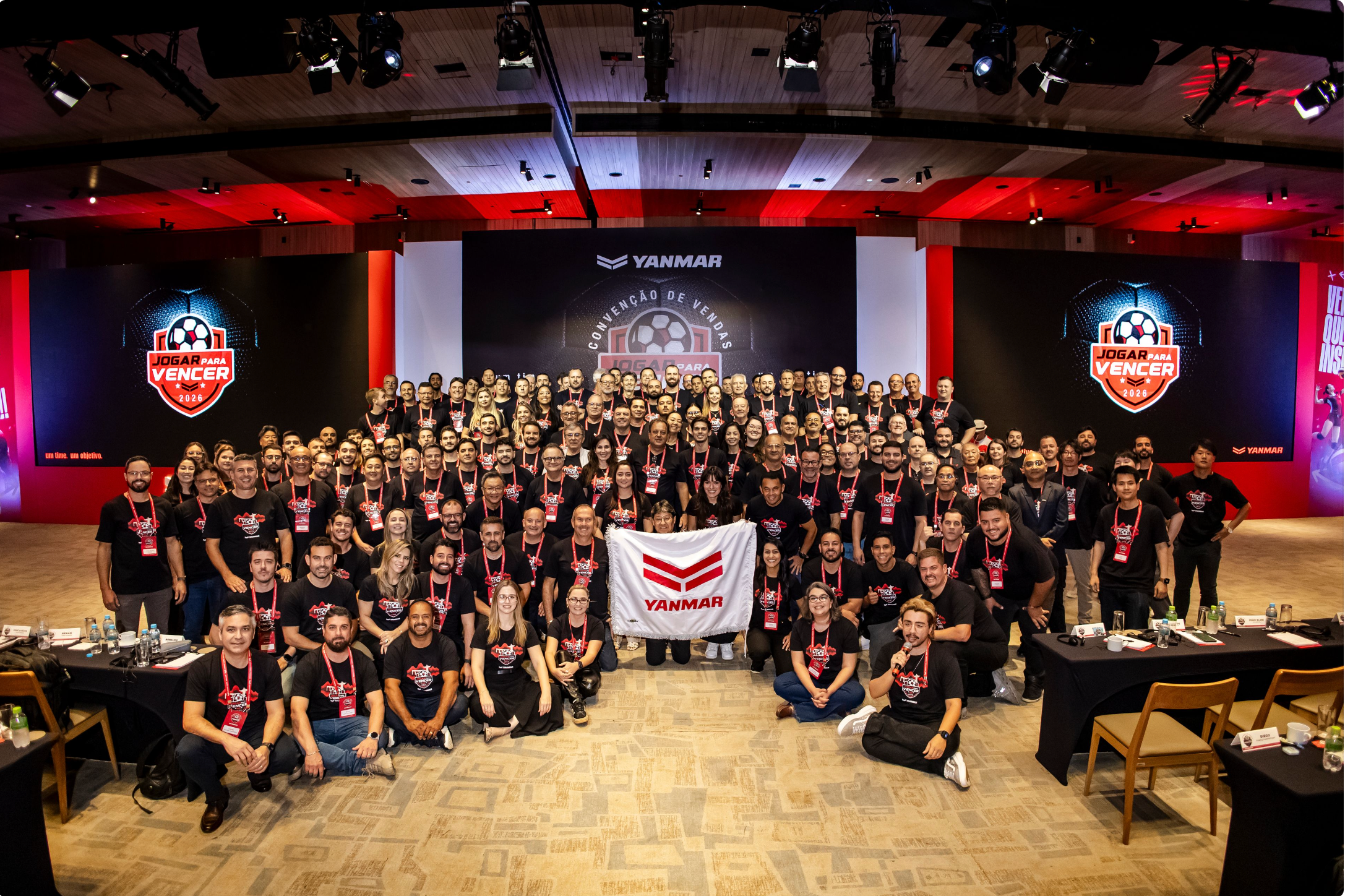
Recent dealer meetings in Brazil reinforced that point. Across markets, customers are weighing investment decisions more carefully, with greater focus on uptime, availability, total cost of ownership and aftersales support. These field conversations give Maehara a clearer view of where pressures are being felt most sharply, and where global strategy needs to be adapted to local conditions.
This customer-led approach is visible in Yanmar CE’s investment choices. The company is transforming Saint-Dizier, France, into its primary European manufacturing hub, supported by a new wheel loader production line, expanded logistics capability and preparations for increased midi excavator finishing capacity. In Grand Rapids, Minnesota, automation and manufacturing capability is being strengthened through robotic welding, laser cutting, an extended assembly line and a more efficient powder coating paint system.
For Maehara, these investments form part of a broader effort to strengthen the business around what customers value most, so that Yanmar CE can deliver dependable equipment and support local market needs with greater consistency.
Strengthening what customers notice
The current environment also calls for discipline. Growth remains the ambition, but the immediate work is making the business stronger from within. “In these conditions, our priority is to build a stronger and more resilient business,” Maehara says. “If we improve how the business works today, we are better able to invest in the products and support customers will need when the market moves again.”
Improvements to factory productivity, inventory planning and quality stability all shape what customers experience in the field. When machines and parts are readily available, quality is consistent and aftersales teams can respond quickly, confidence grows. By making quality and operational information easier to see across the business, Yanmar CE is helping teams spot issues earlier and respond more consistently.
Dealer capability, customer confidence
Dealer capability is central because, for many customers, the dealer defines the relationship with the brand long after the machine is delivered. Maehara views dealers as business partners, with the focus on development rather than one-way management. In mature regions, this may mean clearer service standards, faster parts support, stronger technical knowledge and more consistent communication. In developing markets, the partnership may need to respond more directly to local conditions, customer expectations and price sensitivity.
“Dealers are essential partners in how we bring Yanmar value to the customers,” says Maehara. “Our role is to develop capability together, so that customers experience the full strength of Yanmar through every interaction.”
Knowledge that can move
Stronger execution also means making better use of experience built across Yanmar CE’s markets. A successful dealer partnership in Brazil or an aftersales approach developed in Korea cannot simply be copied elsewhere, but the thinking behind them can travel. The challenge, Maehara shares, is to externalize tacit knowledge – turning field experience into practical knowledge the wider business can use, so regional teams can shape proven ideas around their own customers and markets.
Here is where Digital Transformation (DX) and Artificial Intelligence (AI) become practical rather than abstract. For the business, the goal is to make experience, data and internal knowledge easier to access and use across markets. Maehara identifies this as one of Yanmar CE’s key initiatives for 2026, closely aligned with MTP2030 – Yanmar Group’s midterm plan to 2030 – and its focus on building a future-ready organization that connects technology more directly to customer value.
Existing DX work has already shown what this can look like in practice, replacing spreadsheet-based reporting with centralised dashboards that give teams in Japan, Europe and North America a clearer view of quality information. As generative AI becomes part of that journey, it can help employees search and interpret internal knowledge more quickly, supporting faster decisions while keeping human judgement at the centre.
“Yanmar has many successful examples from different markets and different periods of our history,” he says. “If we can identify the factors that made them work, structure that learning and share it more widely, we can move with greater consistency and confidence across markets.”
Close enough to respond
Yanmar CE’s senior leadership meets face to face every quarter in different regions, with customer and dealer visits built into the agenda. This keeps discussions about strategy close to the conditions the business is trying to understand. This discipline matters as external pressures become harder to predict, from trade policy and tariffs to financing conditions and uneven construction demand. For Maehara, the answer is to recognize how behavior is changing, then respond with clarity.
“There are many uncertainties that no company can control completely,” he says. “What we can control is how quickly we understand changing conditions, how clearly we decide on the right response, and how effectively we execute it across the business.”
For Yanmar CE, that is the work of 2026. The long view must stay close to the ground, with the business strengthened where customers feel it most. The aim is to meet the next phase of growth with readiness, rather than reaction.

About Yanmar Compact Equipment
Yanmar Compact Equipment (Yanmar CE) is a global leader in the design, manufacture and support of compact equipment for a range of segments, principally construction and other earthmoving applications. Its products include extensive ranges of mini and midi excavators, wheel loaders, compact track loaders and tracked carriers. These are supported by a wide range of services designed to ensure customer success.
A global company with proud Japanese heritage, Yanmar CE has manufacturing facilities in Asia, Europe and North America – and an extensive international dealer network. Renowned for its innovative approach – it was the first to market with the now-benchmark mini-excavator, and is credited with popularizing the zero-tail swing concept – Yanmar CE remains a trusted brand known for its reliability, performance and commitment to customer satisfaction. These traits are demonstrated through the company’s tagline – ‘Building with you’.
For more details, please visit the official website. https://www.yanmar.com/global/construction/
About Yanmar
With beginnings in Osaka, Japan, in 1912, Yanmar was the first ever to succeed in making a compact diesel engine of a practical size in 1933. A pioneer in diesel engine technology, Yanmar is a global innovator in a wide range of industrial equipment, from small and large engines, agricultural machinery and facilities, construction equipment, energy systems, marine, to machine tools, and components. Yanmar’s global business operations span seven domains. On land, at sea, and in the city, Yanmar provides advanced solutions to the challenges customers face, towards realizing A Sustainable Future.
For more details, please check out the official website of Yanmar Holding