
By Paul Williams, Domus Ventilation Product Manager
As the UK edges closer to its 2050 Net Zero emissions target, the spotlight on building design has never been more intense. While much attention has rightly been given to insulation, renewables, and heating systems, ventilation is quietly emerging as one of the most crucial—and complex—elements in creating homes that are both energy-efficient and healthy to live in.
For housing developers, M&E consultants, and architects, specifying residential ventilation systems should no longer be just about compliance with current Building Regulations. It’s about anticipating future standards, technological advances, and occupant expectations. In short, it’s about future-proofing.
The New Standard for Residential Ventilation
The Future Homes Standard, set to come into force in Autumn 2025, will raise the bar for energy performance in new homes. Central to this will be reducing heat loss, which inherently leads to more airtight building envelopes. While this is positive from an energy-saving perspective, it brings a major challenge: without adequate ventilation, indoor air quality (IAQ) suffers. Poor IAQ is known to be detrimental to occupants’ health, as well as their comfort.
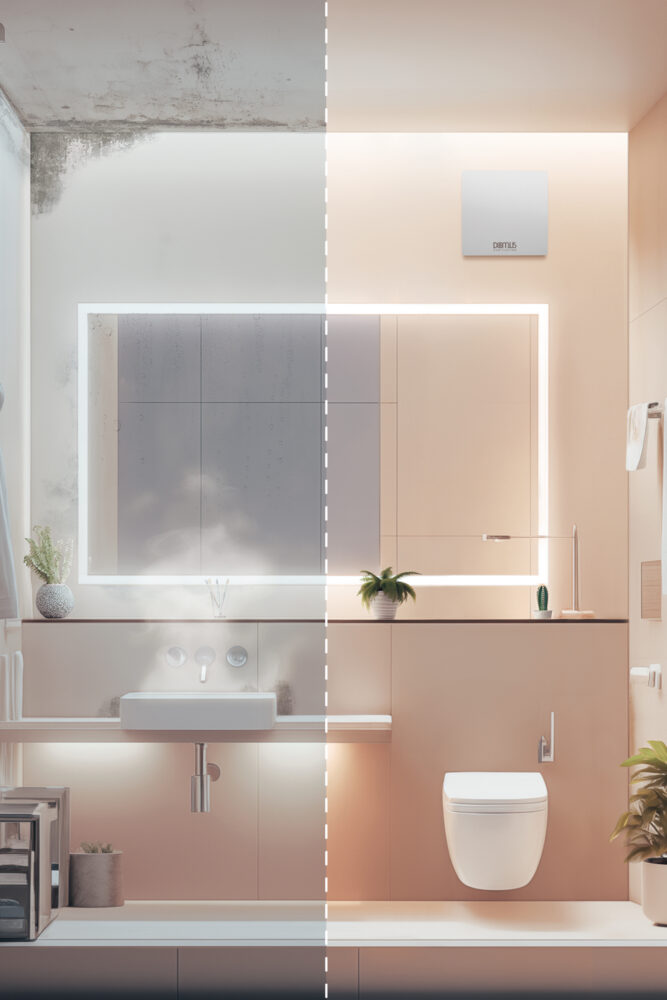
Approved Document F (Ventilation) was updated to reflect these concerns. The 2021 changes introduced stricter airflow requirements and clearer guidance on mechanical ventilation systems, especially in airtight properties. But if you’re only designing to meet today’s minimum standards, your developments may fall short of tomorrow’s expectations—and may require costly retrofits later.
A Shift in Specification Strategy
Traditionally, ventilation has often been treated as a compliance checkbox. But forward-thinking specifiers are now treating it as a core component of a building’s environmental strategy. Here’s how that shift is playing out:
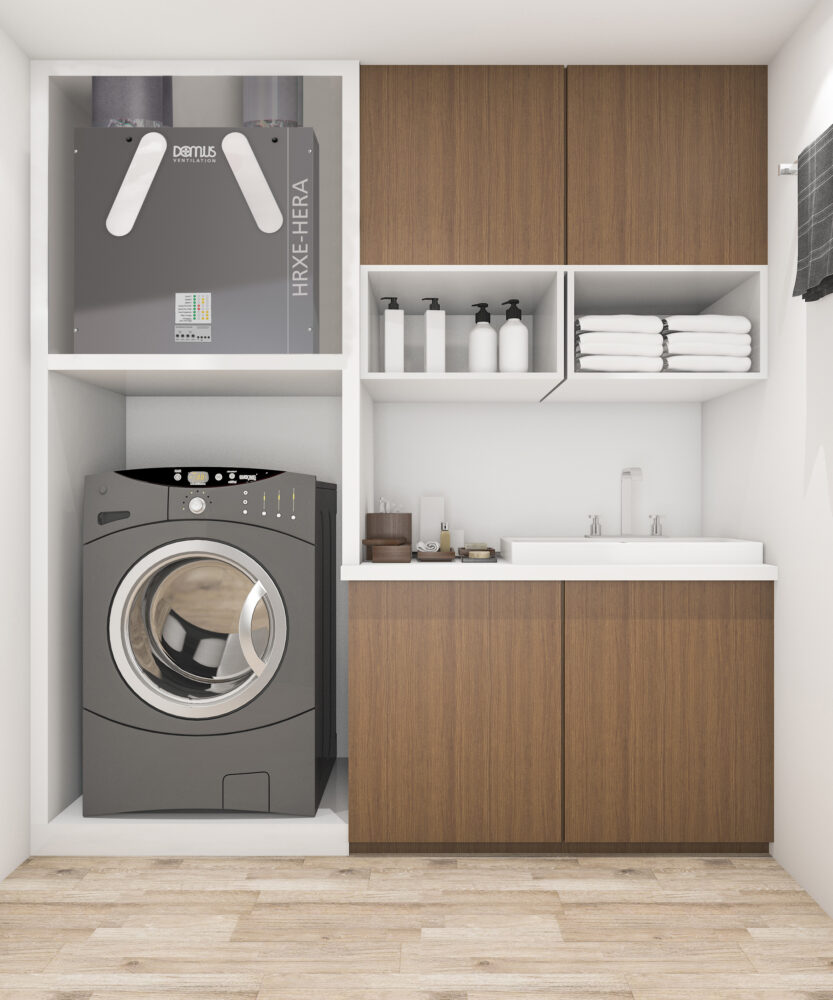
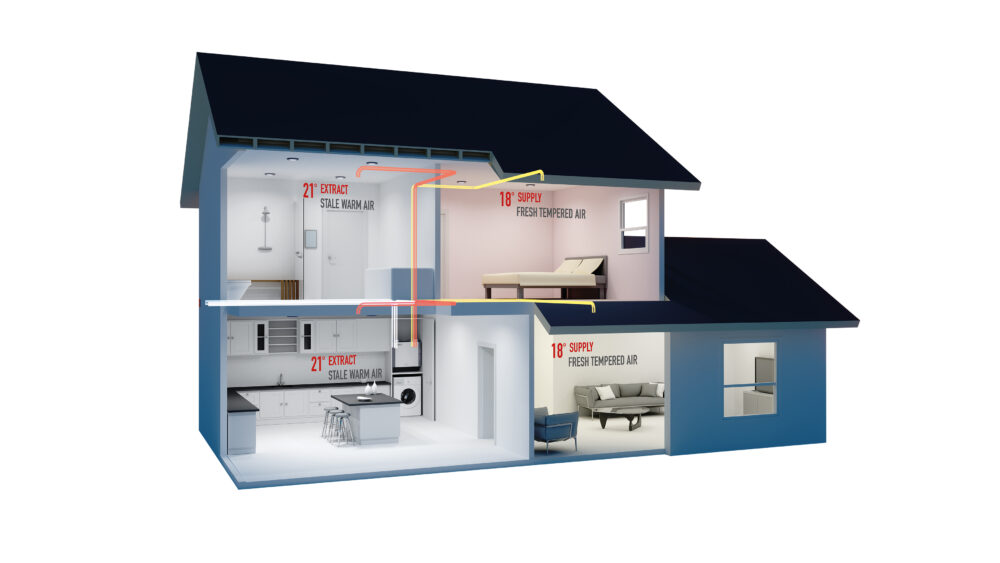
1. From Intermittent to Continuous Ventilation: Intermittent extract fans, once common in residential new builds, are increasingly giving way to continuous mechanical extract ventilation (MEV) and mechanical ventilation with heat recovery (MVHR). These systems provide consistent airflow and improved IAQ while reducing energy loss. MVHR, in particular, is ideal for high-performance, airtight homes as it recycles heat from extracted air to warm incoming fresh air—supporting both energy efficiency and comfort. Our HRXE MVHR range recovers heat with up to 95% efficiency.
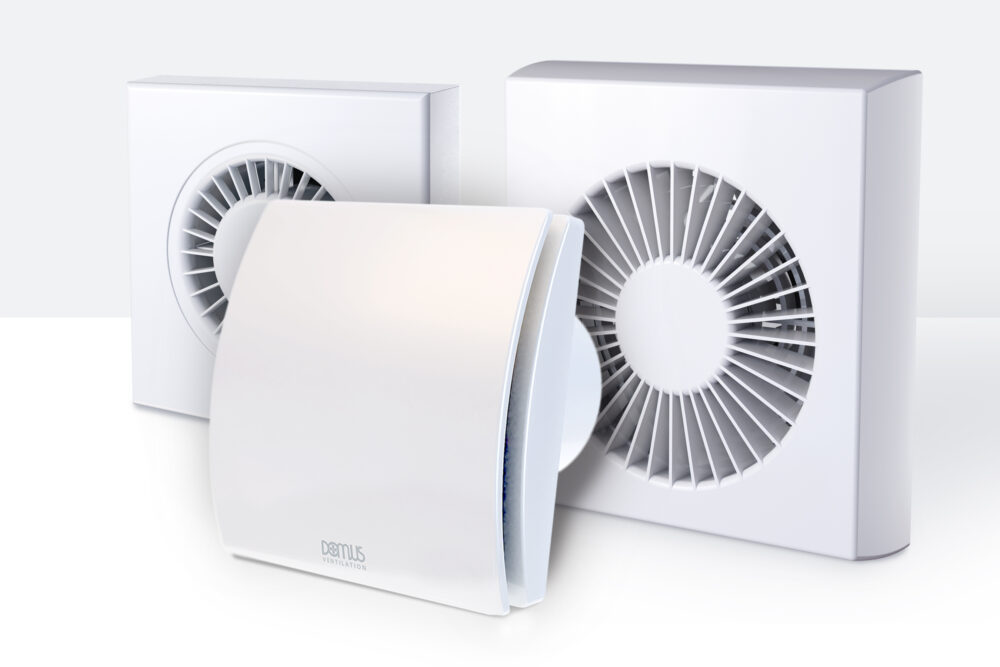
2. Retrofitting with Intent: Over 80% of the homes that will exist in 2050 have already been built. Retrofitting them for Net Zero presents one of the UK’s biggest carbon-reduction challenges. Improving energy performance in existing homes often involves enhancing insulation and sealing leaks—actions that can exacerbate ventilation problems if not balanced properly. Retrofitting with whole house ventilation systems – particularly where ducting space is limited – may not be an option here, but the use of more powerful extract fans is. These modern fans not only improve IAQ but also help protect the building fabric by reducing moisture-related issues.
Aligning Ventilation with Net Zero Carbon Goals
Achieving Net Zero in housing isn’t just about heating and insulation. It’s about a whole-house approach that includes properly designed, installed, and maintained ventilation systems. The operational energy use of these systems matters—and so does their contribution to long-term building performance.
Consider the lifecycle emissions of poorly ventilated homes: from the energy used in dehumidifiers to mitigate damp, to the healthcare costs linked to poor IAQ, the indirect carbon cost can be significant. Well-designed mechanical systems, especially those incorporating heat recovery, help reduce both direct and indirect emissions.
Looking Ahead: What Specifiers Should Do Now
To truly future-proof your residential projects, consider the following:
- Go beyond compliance: Today’s regulations are a minimum—design for where the standards are going, not where they are now.
- Design for airtightness and ventilation together: Don’t treat these as separate disciplines. They must work in harmony.
- Use smart systems where appropriate: They improve energy performance and give occupants more control over their environment.
- Engage early with ventilation experts: Involve manufacturers and consultants at the design stage to avoid compromises later.
- Think lifecycle: Specify systems with durability, low maintenance, and long-term energy performance in mind.
Conclusion
Residential ventilation is undergoing a quiet revolution. As homes become more airtight and the demands for energy efficiency and health grow, so too does the need for smarter, more integrated ventilation strategies. For those in the housing sector, now is the time to rethink how ventilation is specified—not just for compliance, but for carbon, comfort, and the long-term future of our built environment.
Domus Ventilation is committed to supporting this transition with innovative products, technical expertise, and guidance to help you navigate the evolving landscape of residential building standards. Because when it comes to future-proofing homes, good ventilation isn’t optional—it’s essential.
Domus Ventilation is a manufacturer of market-leading ventilation systems that save energy and improve indoor air quality.