

After more than 30 years working in road safety – across workplace testing and police-led drink and drug driving enforcement – Ean Lewin, Chair of D.tec International and road safety campaigner has welcomed the publication of the Government’s Road Safety Strategy (RSS) and its ambitious but achievable target to reduce road deaths and serious, life-changing injuries by two-thirds over the next decade.
“These targets are admirable,” Lewin said, “but we must not become complacent or get lost in endless committees. As the strategy itself says, over the past decade twenty-two European countries have made more progress in reducing road fatalities than the UK – which demands immediate action.”

Drink Driving
The Strategy rightly highlights drink driving, including the estimated 260 deaths a year caused by alcohol, and signals an intention to lower the drink-drive limit in line with Scotland and effectively the rest of the world. Lewin urged the media not to focus on how many drinks are ‘safe’.
“Any alcohol impairs your ability to drive. The blasé decision to say ‘I’ll be alright’ is exactly what leads to serious consequences – putting you and the public at risk. The message should be simple: don’t drink and drive.”
Drug Driving
Lewin warned that the Strategy remains too light on drug driving, now one of the most rapidly increasing causes of road traffic collisions leading to death and serious injury.
Drug driving is not measured anywhere near accurately enough, and Lewin welcomed the Strategy’s commitment to understanding where data gaps exist across the road safety landscape.
“That acknowledgment is important,” he said, “because without accurate data, we cannot design effective policy.” 2023 figures suggest that around 170 deaths annually are linked to drug driving, plus many serious injuries, but these numbers already lag behind reality.
Lewin welcomed the Department for Transport’s recent use of the THINK! campaign for the first time in a decade to highlight drug driving, more so when aligned with the police’s national Operation Limit – the festive drink drug drive campaign that runs throughout December each year.
Early results from the most recent campaign and from particularly active forces already show more drug drivers than drink drivers, often by several multiples – a pattern seen consistently for at least the past three years – the intensity all forces need to be seen to operate at to create a credible deterrent.
Lewin also highlighted systemic inefficiencies, including the ability for defence solicitors to request extended laboratory reports, the writing of which sometimes take as long as 100 standard reports, and questioned whether such requests should require judicial authorisation. He also noted that coroners’ toxicology-test only around three-quarters of deceased drivers, calling for universal testing to allow full and accurate reporting of drug-driving deaths.

Driving Licence Suspension
Lewin strongly welcomed the Strategy’s intention to consider driving licence suspension. For drink driving, this is straightforward: evidential samples are analysed immediately at the police station and the driver is charged. For drugs, however, the current blood-only process can take several months.
“That is why the Strategy’s reference to exploring an alternative evidential matrix – saliva for example – is so important,” Lewin said. “But there is a real risk of disappearing down a rabbit hole.”
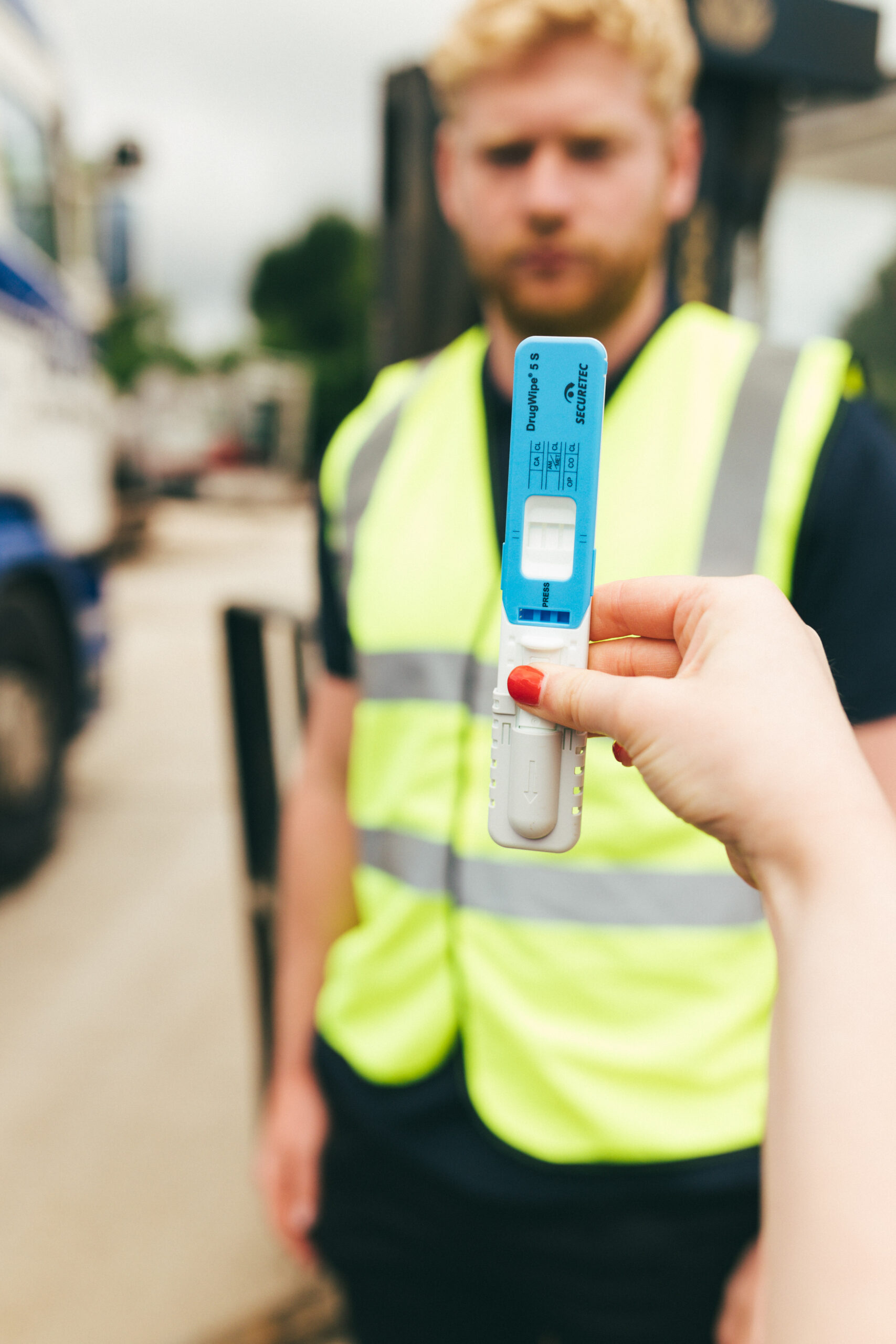
Lewin acknowledged the potential for a small, portable roadside evidential drug-testing device like modern evidential breathalysers.
“However, as an engineer and supplier of drug-testing equipment, I can say this is a massive technical challenge. Expecting a robust, multi-drug roadside device to replace fully accredited laboratories using extensive equipment, operated by degree-qualified toxicologists, could take ten years or more. Industry is working on it – but the public shouldn’t be made to wait.”
Instead, Lewin urged prompt action using what already works: immediate roadside collection of evidential saliva, processed by existing accredited laboratories.
“Under the current complex, expensive and time-consuming blood-only system, samples are often taken hours later when levels have already fallen significantly reducing the numbers prosecuted.”
If a driver fails a roadside saliva screen and an evidential saliva sample is taken immediately, the drugs are captured while present and this will lead to almost 100% convictions.
Countries such as France and Australia have used evidential saliva testing on the road for more than a decade, achieving similar results.
In the UK, evidential saliva testing already works in the workplace, where it is lawfully and effectively used to remove individuals from safety-critical roles, with results typically processed within a week.
“The technology already exists,” Lewin concluded. “What’s needed now is rapid legislative change. Blood is not the only option – and it is no longer the best one to create the much-needed deterrent.”
With close to one third of collisions occurring while people are at work and drawing on D.tec’s 30 years of workplace safety experience, Lewin fully supports the need for a National Work-Related Road Safety Charter for organisations that require people to drive or ride on their behalf. However, he is clear that if voluntary action proves insufficient, regulation will be necessary.
Lewin also welcomed the Strategy’s commitment to stronger governance and performance metrics, including the establishment of a Road Safety Board with ministerial leadership, supported by Expert Advisory Panel(s) drawing on frontline expertise.
Concluding, Lewin offered his 30+ years’ experience and insight to anyone working in the Road Safety community.

About D.tec International
D.tec International provides drug and alcohol testing solutions for safety-critical industries, including rapid testing technologies, scalable training programmes, and policy development support. The company’s DrugWipe technology is used by all UK police forces for roadside drug testing since 2015 and has been adapted for workplace applications across the transport and logistics sector for 30 years.